Driving in Romania – What Foreigners Need to Know
Foreigners driving in Romania should know that I recommend preparing for narrow, winding mountain roads, frequent aggressive overtaking and occasional poorly marked rural signage; at the same time you can enjoy stunning scenic routes, affordable fuel and well-maintained highways near major cities. I advise you to carry your driving permit, check local traffic laws, respect speed limits, and be cautious of tractors and livestock on country lanes to keep your trip safe and smooth.
Driving Regulations in Romania
Licensing Requirements
If you’re from an EU/EEA country your national licence is valid here, but I always carry my passport as well because officials commonly ask for ID during checks. For visitors from non-EU countries you should bring both your national licence and an International Driving Permit (IDP) – rental firms and police often insist on the IDP alongside the original licence. If you plan to stay or work in Romania for more than 12 months you will need to exchange your licence for a Romanian one under local residency rules.
I advise checking rental-company rules before booking: many require the licence to have been held for at least one to three years, set a minimum age of 21-25 (with young-driver surcharges under 25), and block a sizeable deposit on your credit card. If you drive a vehicle registered outside the EU, carry a valid insurance Green Card or equivalent; I’ve seen travellers stopped for lack of cross-border insurance documentation.
Traffic Laws and Signs
Speed limits are enforced strictly: 50 km/h in built-up areas, 90 km/h on secondary rural roads, about 100-120 km/h on larger national roads and 130 km/h on motorways where posted. Seat belts are mandatory for all passengers, and children must use appropriate restraints (typically for kids under 12 years or 135 cm). I personally avoid using a hand-held phone while driving – mobile use is prohibited unless using a hands-free system – and you should expect frequent speed cameras, police checkpoints and fines that are applied on the spot.
Priority rules follow the standard pattern: priority to the right at unmarked intersections unless signs give different instructions, and roundabouts require yielding to traffic already circulating. Road signs use the usual European conventions (red-triangle warnings, blue mandatory/info signs, circular speed/ban signs); I find watching for temporary signs on roadworks imperative, as delays and diversions are common and not always well-signed.
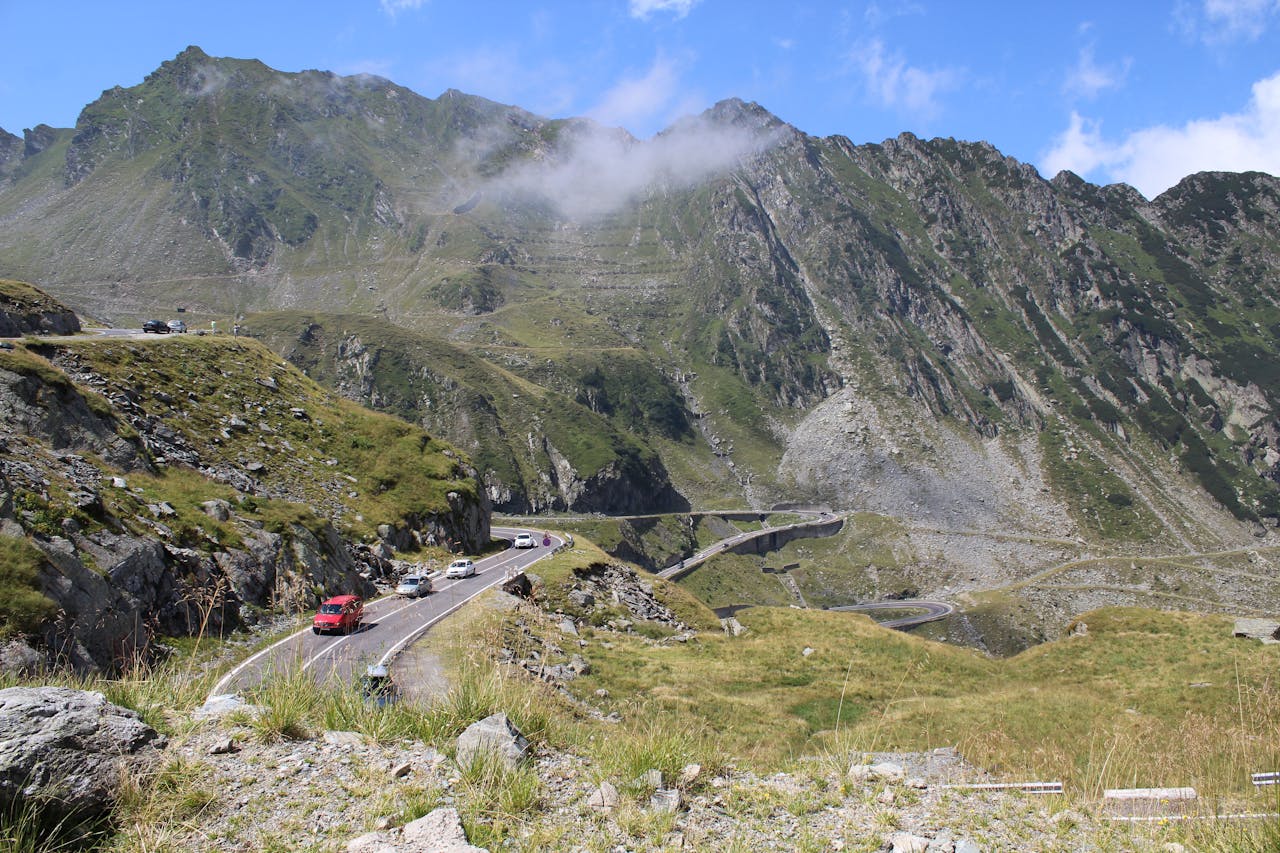
On mountain routes such as the Transfăgărășan and Transalpina you’ll encounter narrow lanes, frequent hairpins, and occasional single-lane sections controlled by temporary signals – these stretches are hazardous in bad weather, often closed in winter, and you should watch for slow agricultural vehicles and cyclists sharing the road.
Vehicle Requirements
I keep my driving licence, vehicle registration (talon), passport or ID, and proof of insurance together in the glovebox because Romanian police commonly ask for all of them during roadside checks. You must have valid third‑party liability insurance (RCA) and a valid ITP certificate on board; I also carry the rental contract when I’m in a hire car. For equipment, a reflective vest and a warning triangle are legally required, and I recommend a fire extinguisher and basic first‑aid kit for longer trips or mountain drives.
When winter comes I switch to winter tyres and pack snow chains for Transfăgărășan or passes like Predeal, since mountain roads may be closed or officers can require chains during heavy snow. If you drive off the main routes, keep a spare headlamp bulb and a tyre inflator-I’ve had to change a tyre on a narrow county road near Sibiu at night, and those small items made the difference.
Insurance Necessities
I make sure my RCA is active and that my insurer has issued a Green Card (international insurance certificate) if I’m driving a non‑EU‑registered vehicle across borders; EU‑registered cars normally use the standard insurance documents but it’s easier to show the Green Card if any doubt arises. Police will check policy validity during stops, and without proof you risk fines or even vehicle immobilization, so I always carry printed and digital copies of the policy number and the insurer’s emergency contact.
For peace of mind I add CASCO (comprehensive cover) when renting or buying a used car, because RCA only covers third‑party damage. I also buy roadside assistance that covers towing from mountain roads and cross‑border repatriation-on a trip to Maramureș my roadside policy paid for a tow to the nearest authorized garage after a broken driveshaft, avoiding an expensive out‑of‑pocket bill. Before you travel, ask your insurer in writing about any territorial limits and excesses for Romania.
Vehicle Inspection Standards
The periodic technical inspection (ITP – Inspecția Tehnică Periodică) is enforced and you must carry the certificate and sticker; police perform roadside checks, and during registration transfers the ITP is verified. When I bought a second‑hand Dacia in Bucharest the dealer couldn’t complete the sale until a valid ITP was produced, so I scheduled the check the same week to avoid administrative delays.
Inspectors focus on brakes, lights, emissions, steering, tyres and structural corrosion, plus seat belts and exhaust leaks; failing means a restriction or prohibition to drive until repairs are made and the car is reinspected. I once failed an emissions test because of a clogged DPF sensor, and the reinspection after the repair required bringing the car back within 30 days-drives without a valid ITP can lead to fines and being prevented from continuing your journey.
Intervals depend on vehicle age and type, and only authorized ITP stations (listed by Registrul Auto Român – RAR) can issue valid certificates; costs typically range in the low hundreds of lei depending on the checks. I advise you to book an authorized station in advance-when I needed an expedited reinspection in Cluj, the next available slot was three days out, which would have disrupted my travel plans.
Road Conditions and Safety
Types of Roads
I find Romania’s network ranges from modern, high-speed motorways to narrow, cobbled village lanes, and that difference changes how I plan each trip. On the motorways (A1, A2) you can legally drive up to 130 km/h on stretches in good condition, while most national roads (DN) outside settlements are limited to around 90 km/h but often have heavy commercial traffic and variable surfaces. County and local roads (DJ and communal routes) frequently drop to single-lane widths, with potholes, limited signage, and tight bends-I treat them as routes requiring slow, defensive driving.
I outline the main categories below and what to expect from each:
- Motorways – wide lanes, frequent rest areas, toll segments; best choice for long trips between big cities.
- National roads (DN) – mixed quality, key corridors like DN1/E60 are well-maintained but can be congested near Bucharest and major towns.
- County roads (DJ) – narrower, more potholes, limited lighting; expect agricultural vehicles and slow traffic.
- Local/communal roads – often cobblestone or gravel in villages, minimal shoulders, sharp turns.
- Mountain passes – scenic but steep and exposed; Transfăgărășan (DN7C) and Transalpina (DN67C) close seasonally and present hairpin turns and sudden weather shifts.
This helps you pick the safest route and the right equipment for the drive.
| Road Type | Typical Conditions / Tips |
|---|---|
| Motorway (A1, A2) | 130 km/h limit where signed, smooth surface, tolls on some segments; good for long distances. |
| National Roads (DN / E-routes) | Mixed maintenance, sections with heavy trucks; expect 90 km/h limits and variable shoulder width. |
| County Roads (DJ) | Narrow lanes, frequent potholes, agricultural traffic; drive defensively and reduce speed at night. |
| Local / Communal | Gravel or cobbles common, poor lighting, tight bends-suitable for local access only, not high speeds. |
| Mountain Passes (Transfăgărășan, Transalpina) | Scenic but exposed; often closed in winter, sharp hairpins and steep gradients-carry chains and check closures. |
Common Hazards
Potholes and uneven surfaces are the hazards I encounter most often outside major cities; on some county roads I regularly see potholes that can ruin tyres or alignment if you hit them at speed. At night you should expect limited lighting on rural stretches and minimal reflective road markings, so I keep my speed down and my high beams ready where legal. You will also meet slow-moving tractors, cyclists, and pedestrians on narrow roads-on a recent trip in Moldavia I had to brake suddenly for a herd of sheep crossing a DN road, which is not uncommon in agricultural regions.
Winter conditions amplify risks: black ice on bridges and shaded curves, compacted snow on mountain routes, and sudden fog in river valleys. I fit winter tyres for any trip into the Carpathians and carry chains when I plan to cross high passes; many tourist routes (like Transfăgărășan) close between late autumn and spring, so checking local road reports saves time and avoids forced detours. Nighttime overtaking on single carriageway roads is one of the most dangerous maneuvers here because of blind crests and inconsistent lane widths-I avoid aggressive passing unless visibility and road quality are excellent.
For more practical preparation I keep a reflective vest, warning triangle, spare tyre and basic toolkit in the car, save the emergency number 112 in my phone, and note the contact for my insurer’s roadside assistance; if you get a puncture on a remote DJ road it can take an hour or more for help to arrive, so being self-sufficient matters.
Navigating Romanian Cities
City Driving Tips
I stay defensive in Romanian city centers because drivers and pedestrians often assume space that isn’t there; in places like Bucharest and Cluj you’ll see sudden lane changes, motorcycles filtering, and pedestrians crossing between cars. Urban speed limits are usually 50 km/h unless signed otherwise, and many residential pockets drop to 30 km/h-I slow early for narrow, cobbled streets and expect frequent stops near markets and tram lines. When approaching a roundabout I let more aggressive locals take the inside while I use the outer lane and signal well in advance to avoid collisions.
- roundabouts
- speed limits
- pedestrians
- scooters
- one-way streets
- aggressive drivers
- parking enforcement
Any time you enter a historic center or a busy avenue I recommend scanning for sudden stops, tram tracks, and motorcycles between lanes and keeping at least a car’s length of space to react safely.
Parking Regulations
I use on-street signs immediately when I park because most Romanian cities operate paid parking in central areas-commonly enforced roughly between 08:00-20:00 on weekdays (and often Saturday), though evening and Sunday rules vary by municipality. You’ll pay at a meter, by SMS or city app, and in many places you must display the ticket on the dashboard or keep the SMS confirmation on your phone. Residents’ permit bays exist near apartment blocks, so check the signs before leaving your car.
Illegal parking, parking in disabled bays, or blocking a driveway can lead to immediate action: fines commonly fall in the low hundreds of lei and vehicles may be towed if they obstruct traffic or emergency access. I avoid pavement parking; local enforcement officers and private tow companies operate actively in dense sectors.
More practically, I recommend downloading the local parking app or saving the SMS shortcode for the city you’re in, keeping change for meters as a backup, and noting curb markings-blue or signed zones almost always mean paid or permit parking-so you don’t get a ticket or wake up to a missing car.
Fuel and Maintenance
Fuel Availability and Prices
On major roads and in cities you’ll find the usual chains – OMV Petrom (the largest), MOL, Rompetrol, Lukoil and supermarket forecourts like Kaufland – and most of these offer 95 and 98 octane petrol, diesel and GPL/LPG. I fill up LPG regularly because it is widely available and often significantly cheaper than petrol or diesel; many service stations and truck stops on the A1 and A2 corridors list LPG on their pumps. AdBlue is common at highway truck stops and larger stations, but it can be scarce in remote mountain villages, so I carry a small spare can if I’m heading to the Carpathians.
I track prices before long drives: as of 2024 you should budget roughly €1.6-€1.9 per litre for petrol and a similar range for diesel, with LPG around €0.6-€0.9 per litre (approximate RON conversions vary with the exchange rate). Stations on motorways are often open 24/7, but in rural areas pumps can close early or be unmanned – if you drive a long scenic route I advise topping up when you reach a town rather than waiting for the next marked station. Also avoid a costly mistake: never put petrol into a diesel car (or vice versa) – if you do, stop driving immediately and call a tow; repairing fuel-system damage is expensive.
Local Mechanics and Services
In cities you’ll find authorized dealers for every major brand and a dense network of independent garages that offer lower hourly rates; I usually compare two quotes. Typical service prices I see: an oil and filter change €40-€100 (≈200-500 RON), brake-pad replacement per axle €30-€90 (≈150-400 RON), and batteries €60-€140 (≈300-700 RON), with labour rates commonly in the €16-€40/hour range depending on location and shop. Inspections and heavier repairs are faster at brand-service centres but cost more; independent workshops often source aftermarket parts and can finish jobs the same day.
If your car throws a warning light or you have a puncture, call your insurer or roadside-assist provider first – they usually coordinate local recovery and approved garages. Language can be a barrier in smaller towns; I use Google Translate phrases and always ask for a written estimate and a parts list. For rental cars, contact the agency before authorising repairs: they frequently require specific partner garages and will handle billing.
More detail on formal checks: the national periodic inspection (ITP) is handled at authorised testing centres and typically costs around €20-€50 depending on the vehicle and any additional emissions checks; if a vehicle fails the ITP you’ll get a report listing defects that must be fixed before re-inspection. I recommend carrying receipts and a clear service history – they simplify warranty claims and negotiations with mechanics, and I insist on a warranty (usually 6-12 months) for any significant job.
Tips for Foreign Drivers
I keep my driving in Romania checklist short and practical: local speed limits (50 km/h in towns, 90 km/h outside built-up areas, up to 130 km/h on motorways), a valid driving license, proof of insurance and the rovinieta if I plan to use national roads. I also expect rough patches on secondary routes-potholes and narrow bridges are common beyond major cities-so I downshift and slow to avoid undercarriage damage and hidden hazards.
- Carry: passport/ID, driving licence, insurance certificate (Green Card if required), vehicle registration.
- Safety kit: reflective vest, warning triangle, spare bulb set; I add a small first-aid kit.
- Winter prep: fit winter tyres or carry chains in mountain seasons (typically November-March).
- Payment: buy the rovinieta online or at border/cash points before using national roads to avoid fines.
When I drive, I watch for aggressive overtaking on narrow roads and for animals or slow farm vehicles near villages; urban traffic often includes sudden lane changes and frequent use of the horn. This keeps me focused on defensive positioning, anticipating others and minimizing risky maneuvers.
Cultural Considerations
I notice local driving habits quickly: using the horn is more accepted here as a communication tool than in some countries, and headlights are often used during daytime on faster roads. I speak a few key phrases and keep gestures polite-if you pause to let someone merge they usually wave, which I take as a friendly sign and a cue to keep calm in heavy traffic.
Roundabouts and informal lane usage can confuse newcomers, so I watch how locals navigate and mirror safe behavior rather than following rigid expectations. In mountain areas, people often stop by the roadside to take photos or help with a flat tyre; I slow down when I see stopped traffic and treat those spots as potential hazards rather than conveniences.
Emergency Contacts
I store 112 as my primary emergency number and I add my insurer’s roadside assistance and my rental company’s contact to speed-dial-police, ambulance and fire all respond via 112 across Romania. If I’m involved in a minor collision I complete the constatare amiabilă (European Accident Statement), photograph damage and exchange details; for anything involving injuries I call 112 immediately so emergency services dispatch properly.
Police stops can include on-the-spot checks for documents and breath tests, so I keep originals accessible and cooperate calmly-showing paperwork and explaining a situation tends to de-escalate tension quickly. If the vehicle needs towing, I call my insurer’s service first because they can arrange approved garages and avoid inflated local rates.
I also keep a printed list of my embassy’s contact and the local emergency numbers for the region I’m visiting, and I save the insurer and rental-agent phone numbers in my phone and on paper in the glove compartment. This ensures I can act fast if GPS or cell service falters.
To wrap up
So I recommend you carry your driving licence (and an International Driving Permit if your licence isn’t in Latin script), vehicle registration, proof of insurance and the electronic vignette (rovinietă) when required; I advise you to obey speed limits, wear seat belts, use hands‑free devices and avoid driving under the influence, since traffic checks are frequent. I also warn you to expect variable road surfaces outside cities, occasional aggressive driving and specific right‑of‑way rules at intersections and roundabouts, so approach unfamiliar situations with extra caution.
I suggest you inspect and photograph rental cars for damage, keep a charged phone and the emergency number 112 handy, and park in well‑lit or guarded areas to protect your vehicle. If an incident occurs, cooperate with police, retain copies of documents, notify your insurer and contact your embassy if needed; with preparation and attentive driving, I believe you can travel Romania safely and confidently.